
Raised by Wolves
Guest Stack by Island Thug

Dina Sanichar’s life was one of tragedy and isolation. Discovered as a young boy in the Indian jungle, he had been raised by wolves and struggled to adapt to human society.
Efforts to teach him language and social behavior were unsuccessful, and he never learned to speak or connect with others in a meaningful way.
He died in 1895 at around 35 years old, leaving behind a haunting story that continues to captivate those who hear it.
Rudyard Kipling’s The Jungle Book shares intriguing parallels with Sanichar’s life. The novel tells the story of Mowgli, a boy abandoned by his parents and raised by wolves. While Mowgli thrives in the animal kingdom, his interactions with humans reveal the complexities of his dual identity.
Unlike Sanichar’s tragic fate, Kipling’s tale delivers a hopeful message about self-discovery and finding harmony between nature and human civilization.
However, few are aware that it may have been inspired by true events—specifically, the story of Dina Sanichar, the so-called “real-life Mowgli,” who spent his early years believing he was one of the wolves who raised him.
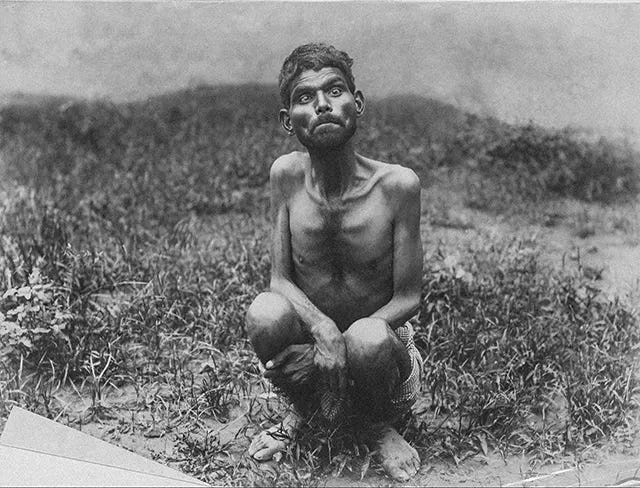
The Discovery of Dina Sanichar: Raised by Wolves
In 1867, a group of hunters traveling through the forests of Bulandshahr, in northern India, came across an extraordinary and unsettling sight.
In the dense jungle, a human child was moving on all fours, followed closely by a pack of wolves. The pack soon retreated into a cave, leaving the hunters shocked and unnerved by what they had just witnessed.
Determined to investigate, the hunters set fire at the mouth of the cave, forcing the wolves to emerge. As the animals came out, the hunters killed them and rescued the child.
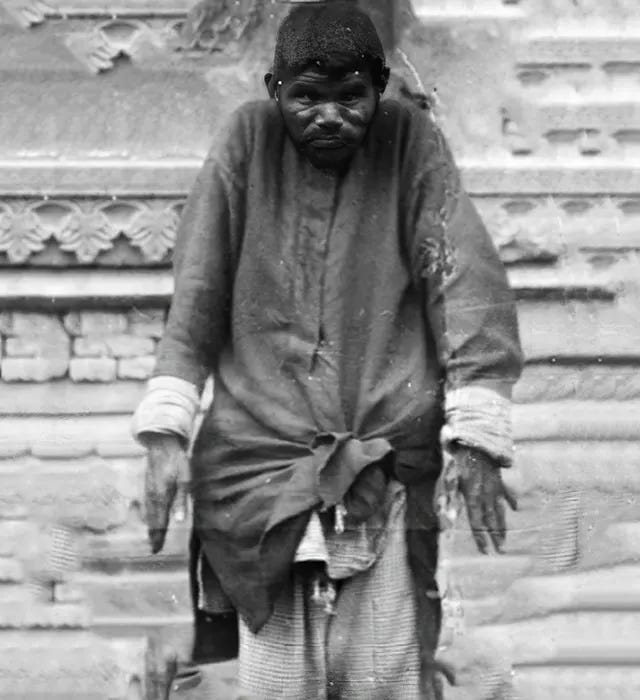
The boy, who appeared to be no older than six, showed no signs of recognizing or responding to the hunters. He avoided them entirely, moving and behaving more like the wolves that had raised him.
Concerned for his survival in the harsh jungle, the hunters decided to take him to the Sikandra Mission Orphanage in Agra.
At the orphanage, the missionaries gave the boy a name, as he had none. They called him Dina Sanichar, inspired by the Hindi word for Saturday—the day he arrived at the mission.
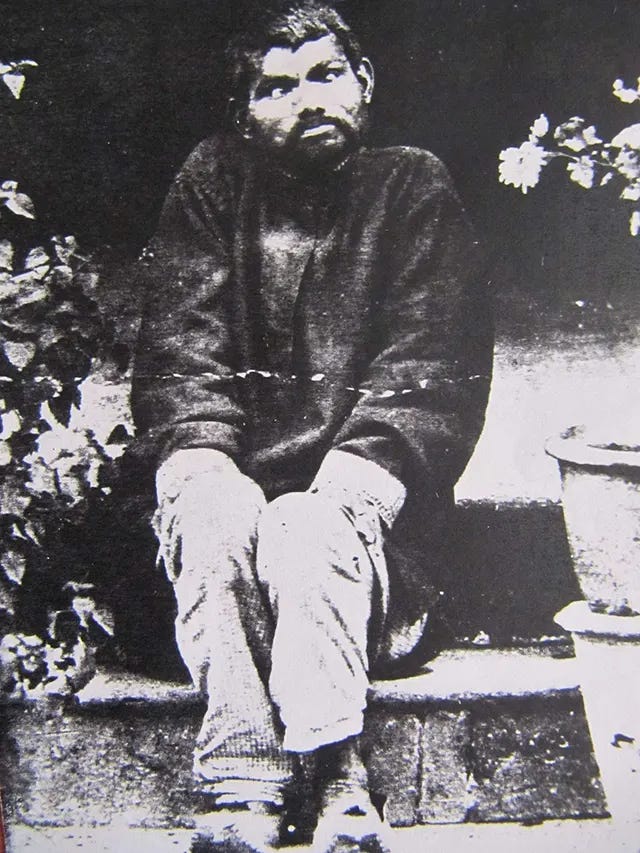
Dina Sanichar Back Into The Civilized World
During his time at the Sikandra Mission Orphanage, Dina Sanichar was often referred to as the “Wolf Boy.” The name reflected the belief that he had been raised by wild animals, with no prior contact with humans.
His behavior only reinforced this notion, as it was strikingly animalistic. Sanichar moved on all fours and struggled to walk upright. He preferred raw meat and frequently gnawed on bones, as though sharpening his teeth.
“The facility with which they get along on four feet (hands and feet) is surprising,” Erhardt Lewis, the orphanage superintendent, wrote to a colleague. “Before they eat or taste any food they smell it, and when they don’t like the smell they throw it away.”
Communicating with Sanichar proved to be a significant challenge. He didn’t speak any language, instead expressing himself through growls and howls akin to a wolf. Attempts to use gestures or pointing to communicate also failed.
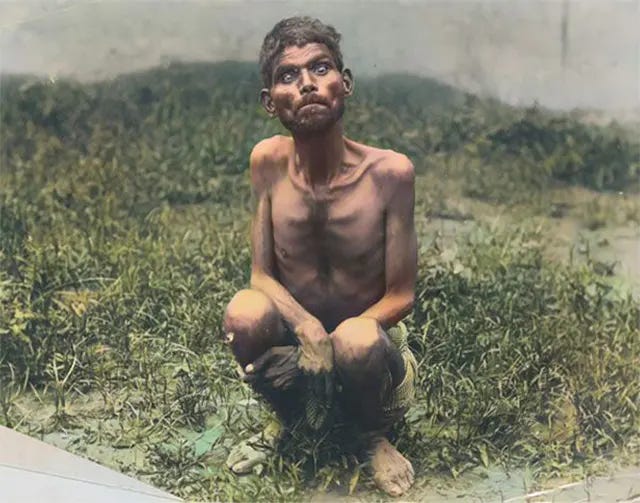
Though the missionaries worked to integrate him into human society, Sanichar never learned to speak. It’s possible that the sounds of human language were too unfamiliar, making them nearly impossible for him to replicate.
Over time, however, he began to adopt certain human behaviors. He eventually learned to walk upright, dress himself, and even mastered what some might call humanity’s most peculiar pastime: smoking cigarettes.
Dina Sanichar did manage to form a connection with one person during his time at the orphanage—another feral child discovered in Uttar Pradesh’s Manipuri region who had also been brought to Sikandra.
Father Erhardt observed this unusual relationship, remarking, “A strange bond of sympathy attached these two boys together, and the elder one first taught the younger to drink out of a cup.”
Sanichar spent the rest of his life under the care of the orphanage, but even after more than 20 years of living among humans, he never fully adapted to their ways.
Social norms and typical human behaviors seemed out of reach for him, as if the imprint of his early years in the wild was too deep to erase. In 1895, at the age of 34, Sanichar passed away from tuberculosis
There Were Other Feral Children Living at the Same Orphanage
Dina Sanichar was not the only child with a wild past living at the Sikandra Mission Orphanage. According to superintendent Erhardt Lewis, the orphanage was home to two other boys and a girl who were also believed to have been raised by wolves.
Their presence suggests that cases like Sanichar’s, though extraordinary, were not entirely unique during that time.
One geographer even claimed that the orphanage had taken in so many “wolf children” over the years that it became almost routine.
Adding to these accounts, British general Sir William Henry Sleeman documented at least five other stories of children who had survived in the wilds of India.
Read the rest here.
https://rarehistoricalphotos.com/dina-sanichar-real-life-mowgli/
“ Determined to investigate, the hunters set fire at the mouth of the cave, forcing the wolves to emerge. As the animals came out, the hunters killed them and rescued the child.”
Bastards. Wiped out the whole family and trafficked the kid
"He eventually learned to walk upright, dress himself, and even mastered what some might call humanity’s most peculiar pastime: smoking cigarettes."
And to drink out of a cup.
And to testify at Senate hearings.